
A painting takes time to process. It's a conversation that stays.
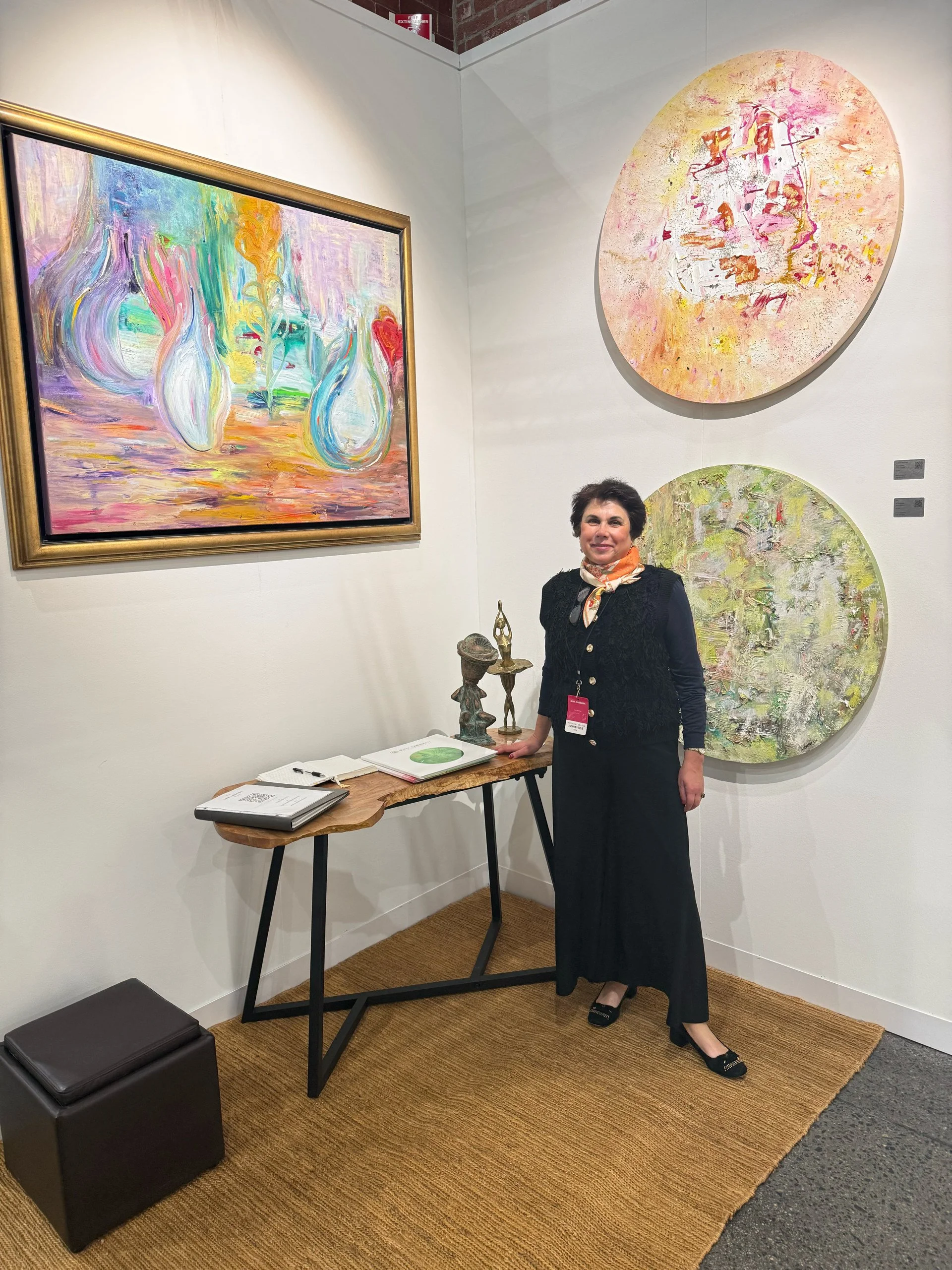
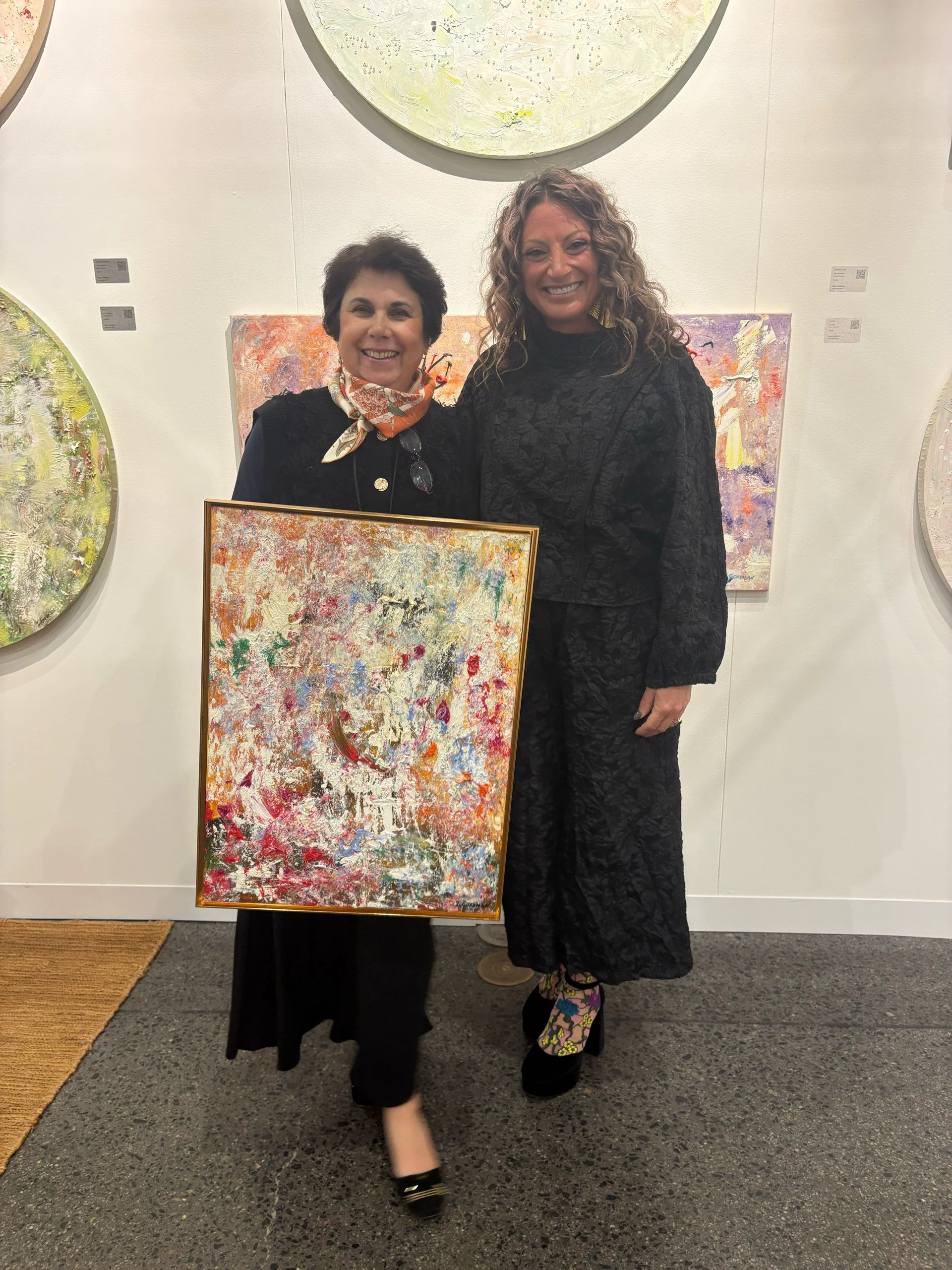
I spent most of the year preparing for this fair. Stretching, painting, framing, labeling, packing. What I could not prepare for was the part that turned out to matter most — standing beside the work while strangers looked at it.
Art is more than a finishing touch to an interior. It invites us to pause, look closer, and discover something unexpected. I have written that before. At the fair I watched it happen several hundred times in four days.
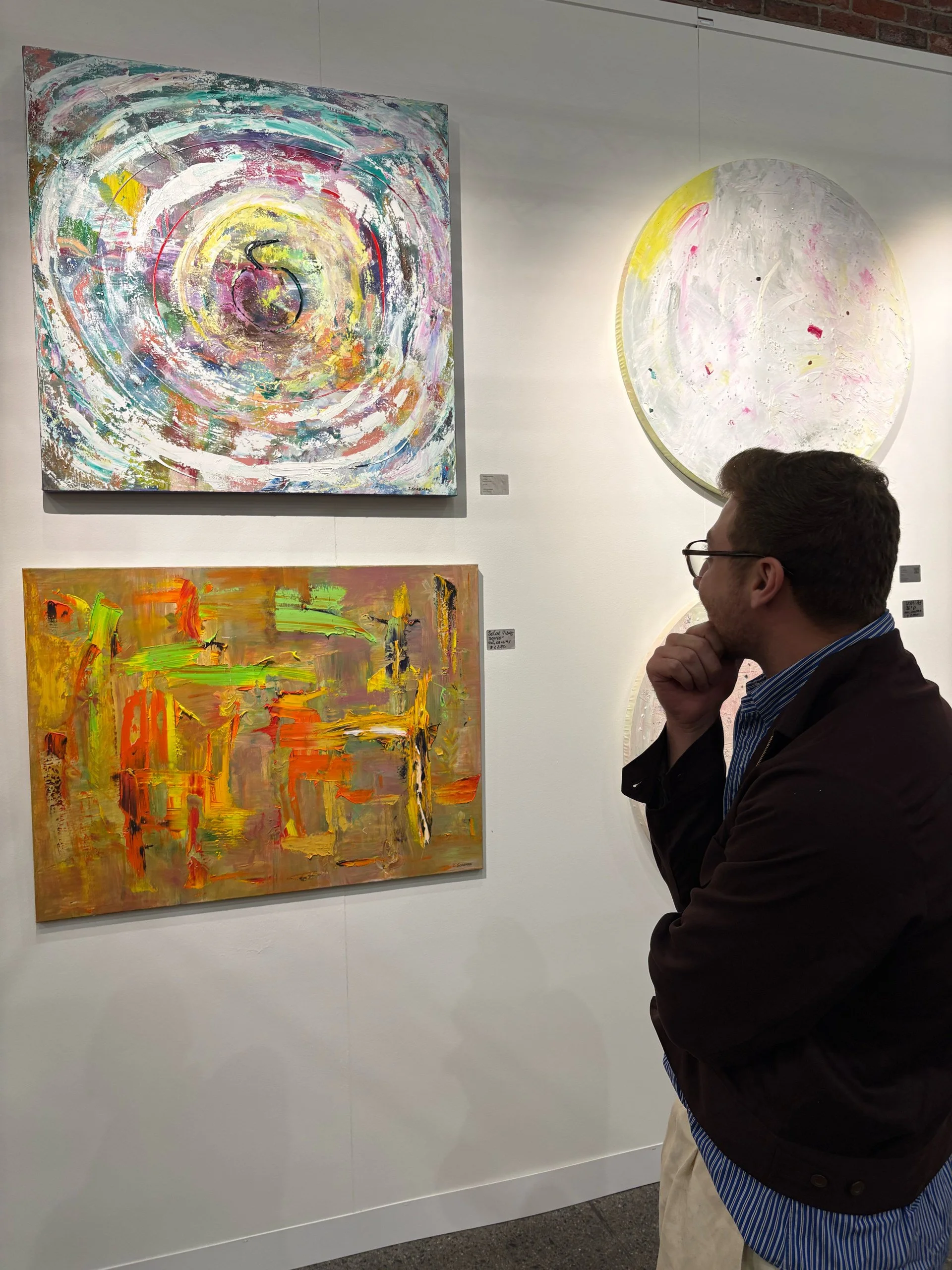
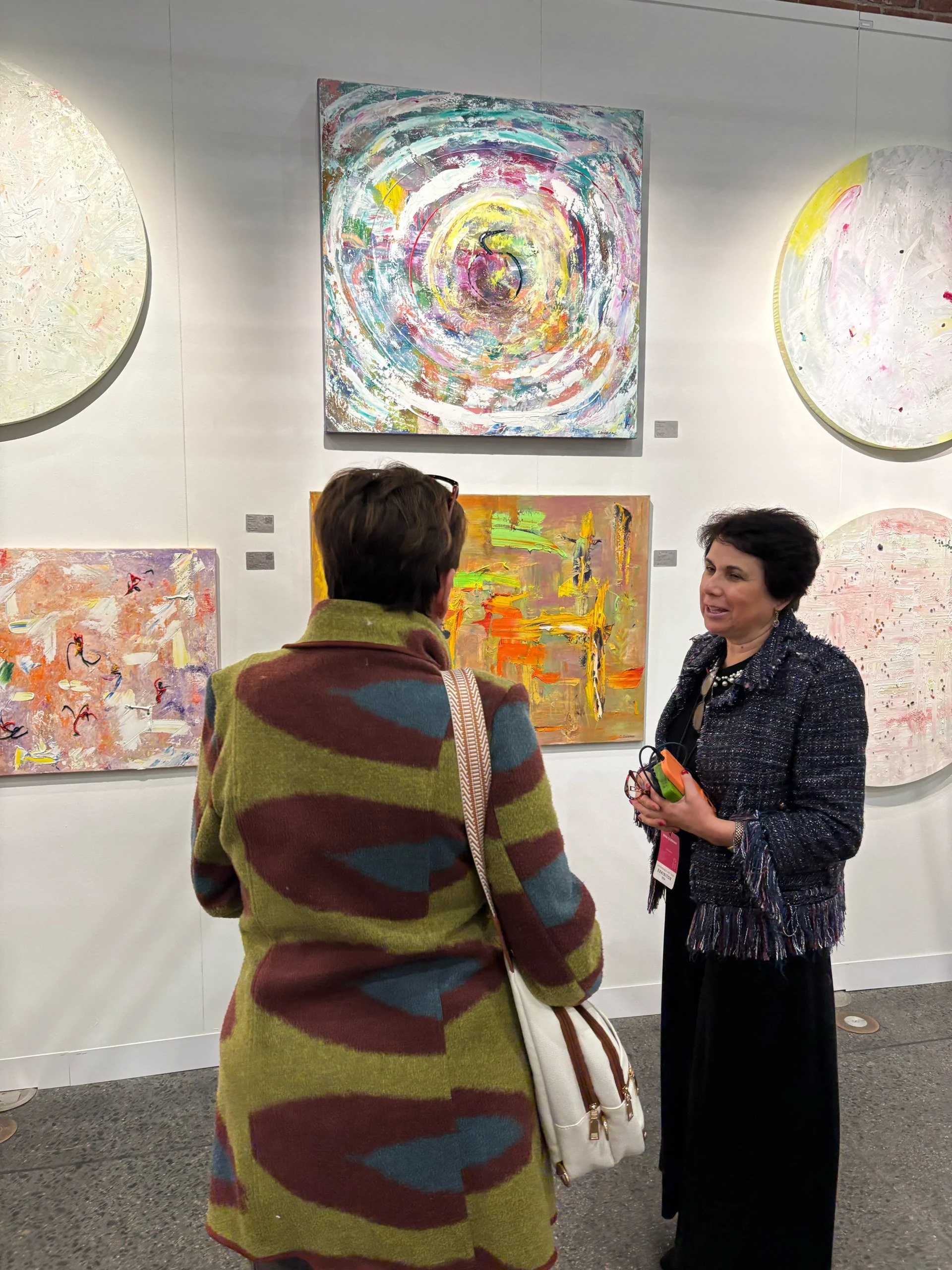
Ten people named the same painting.
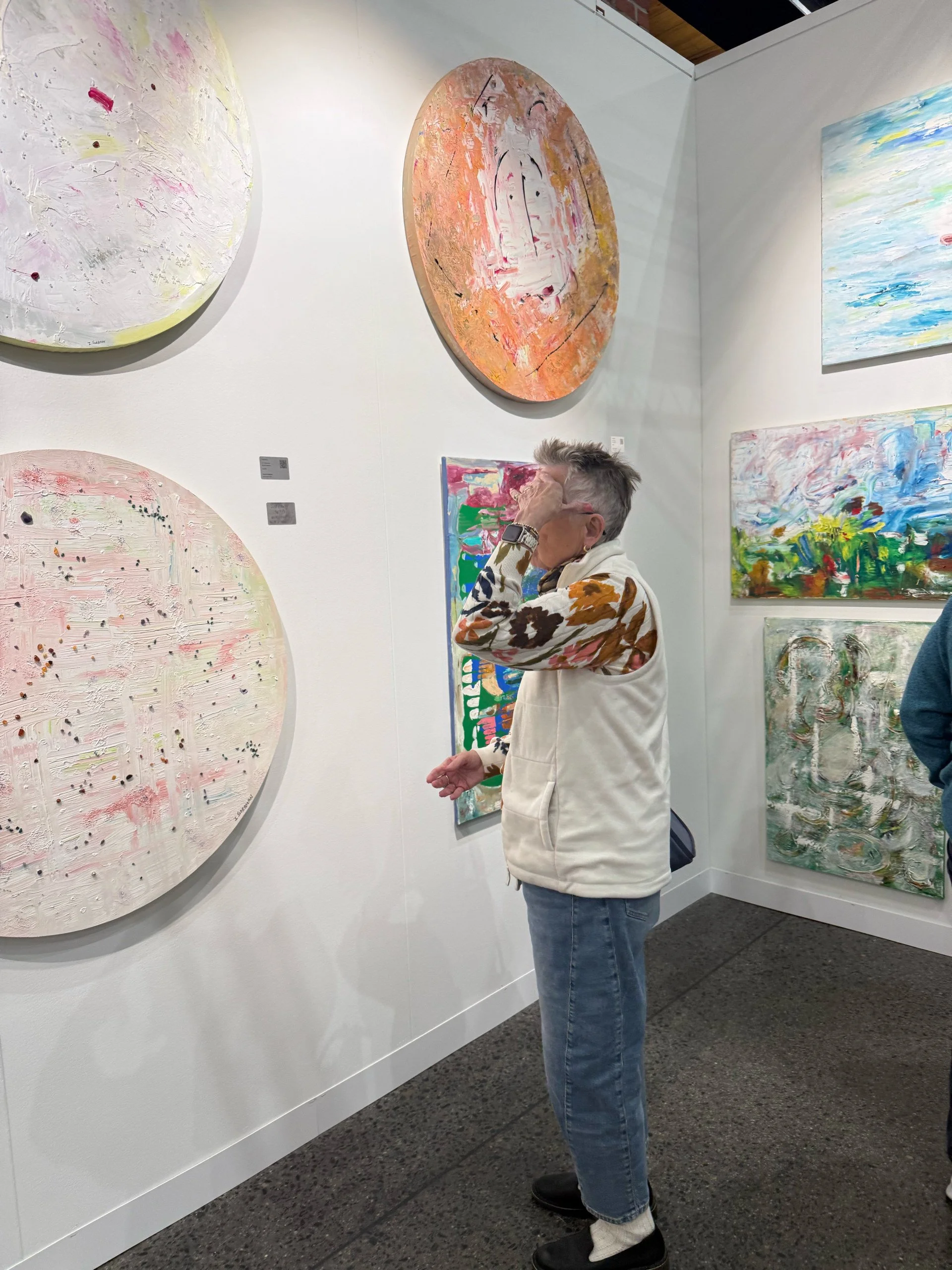
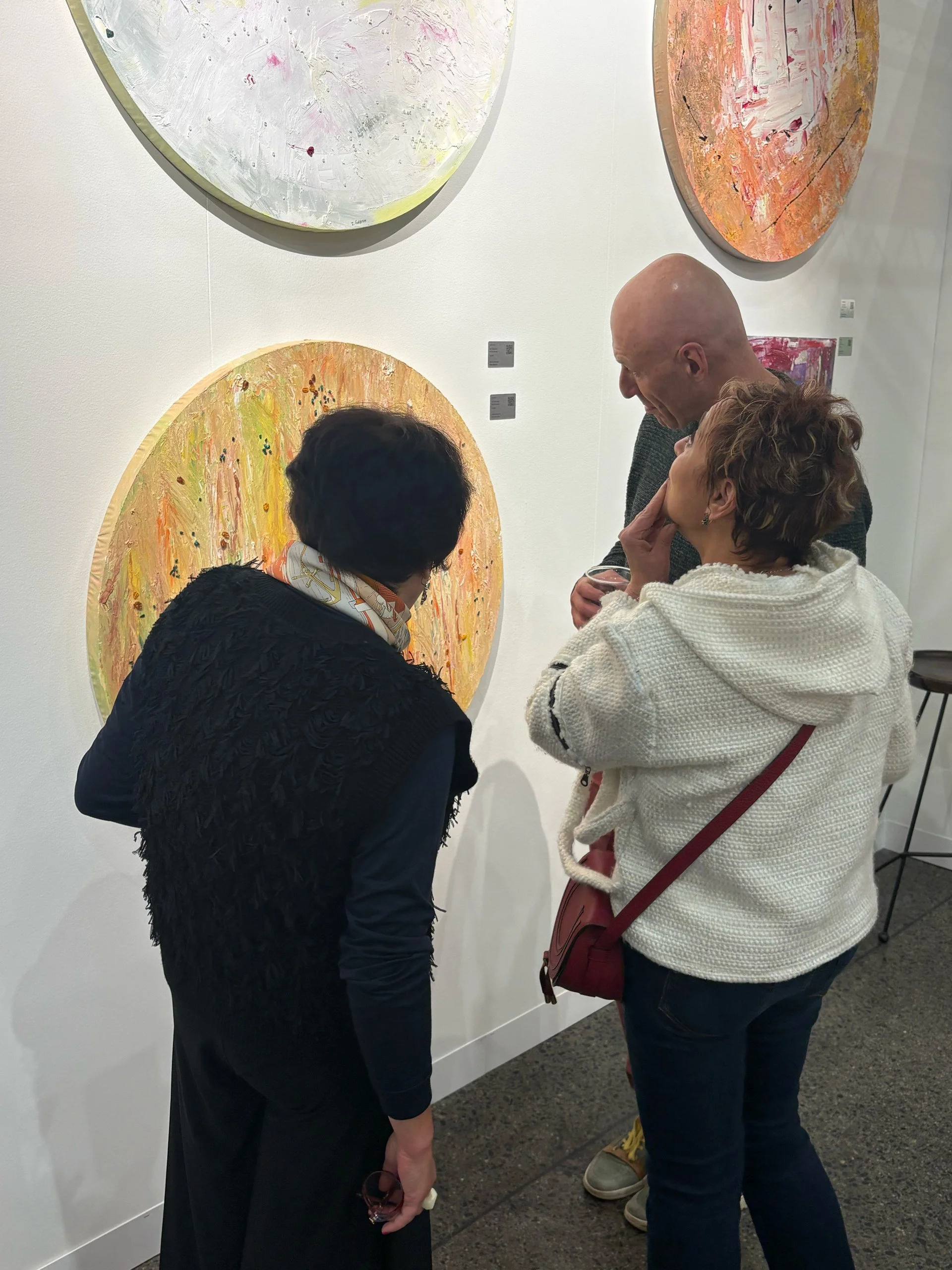
A large round canvas hung at the center of the booth. Over four days, ten different visitors — people who had never met, who came on different days, who had nothing else in common — stopped at that one painting and wanted to talk about it. Not about color schemes or sizes. About what it was doing.
I had not predicted that. A painting can reveal different meanings to different people, and even change for us over time. But I had never before stood in one place long enough to watch ten strangers arrive at the same canvas, separately, and each find their own reason to stay.
What a fair is actually for.
A booth is ten feet of wall in a loud room. You cannot explain anything. People give you four seconds as they walk past, and either something stops them or nothing does.
That turns out to be useful. In the studio I can talk about a painting. At a fair the painting has to do it alone. Four days of that teaches you more about your own work than four months of thinking about it.
The people.
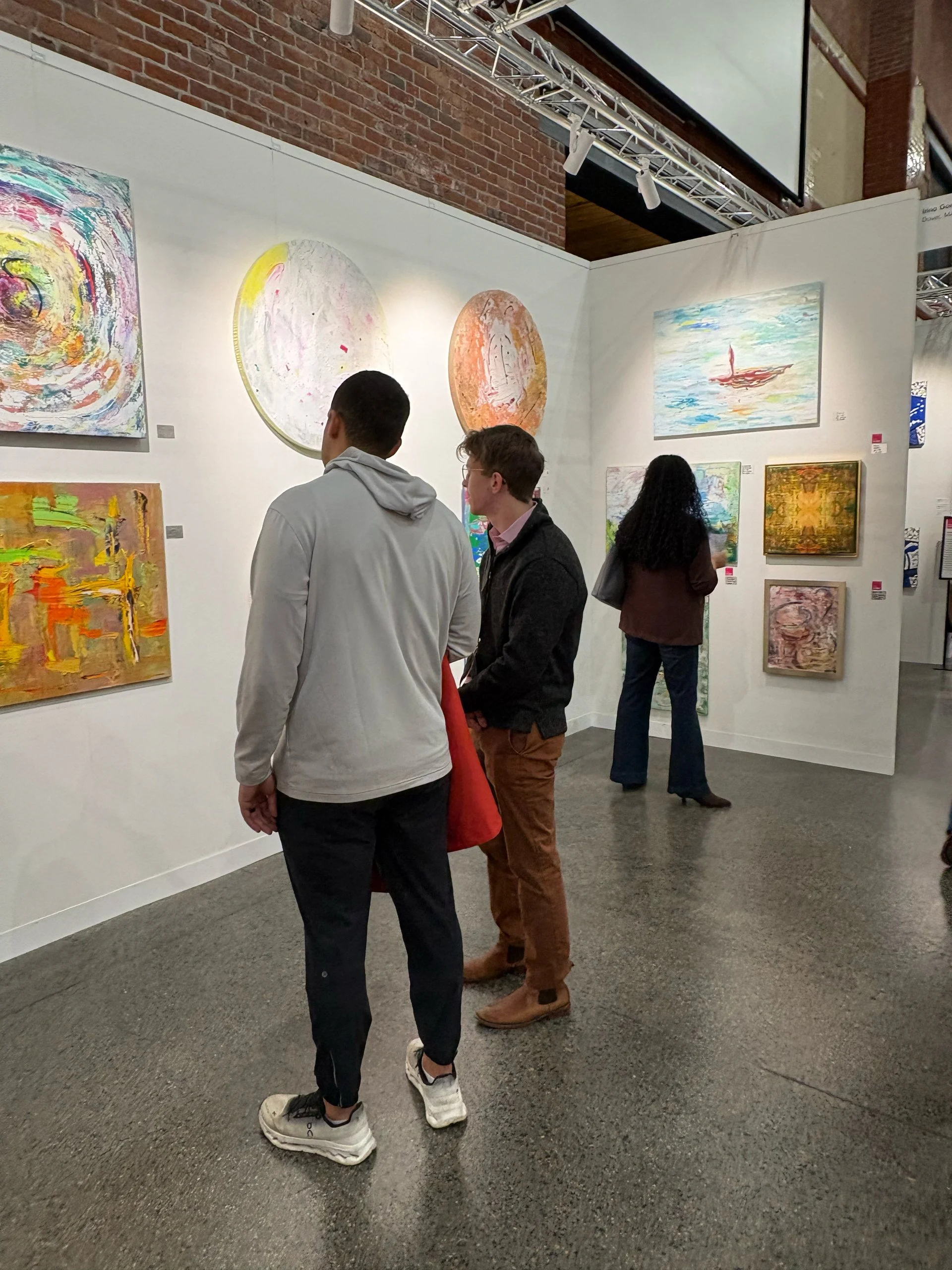
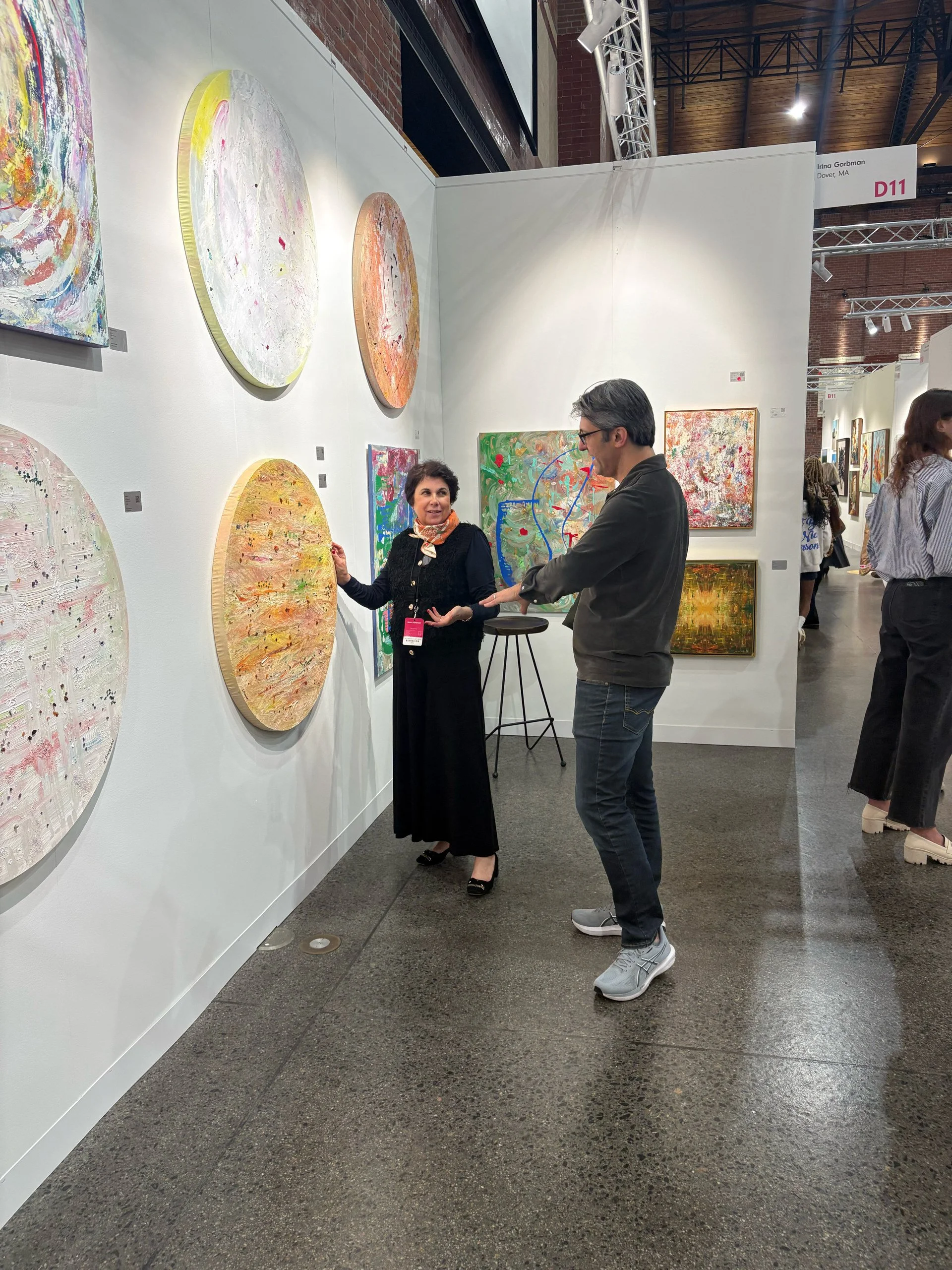
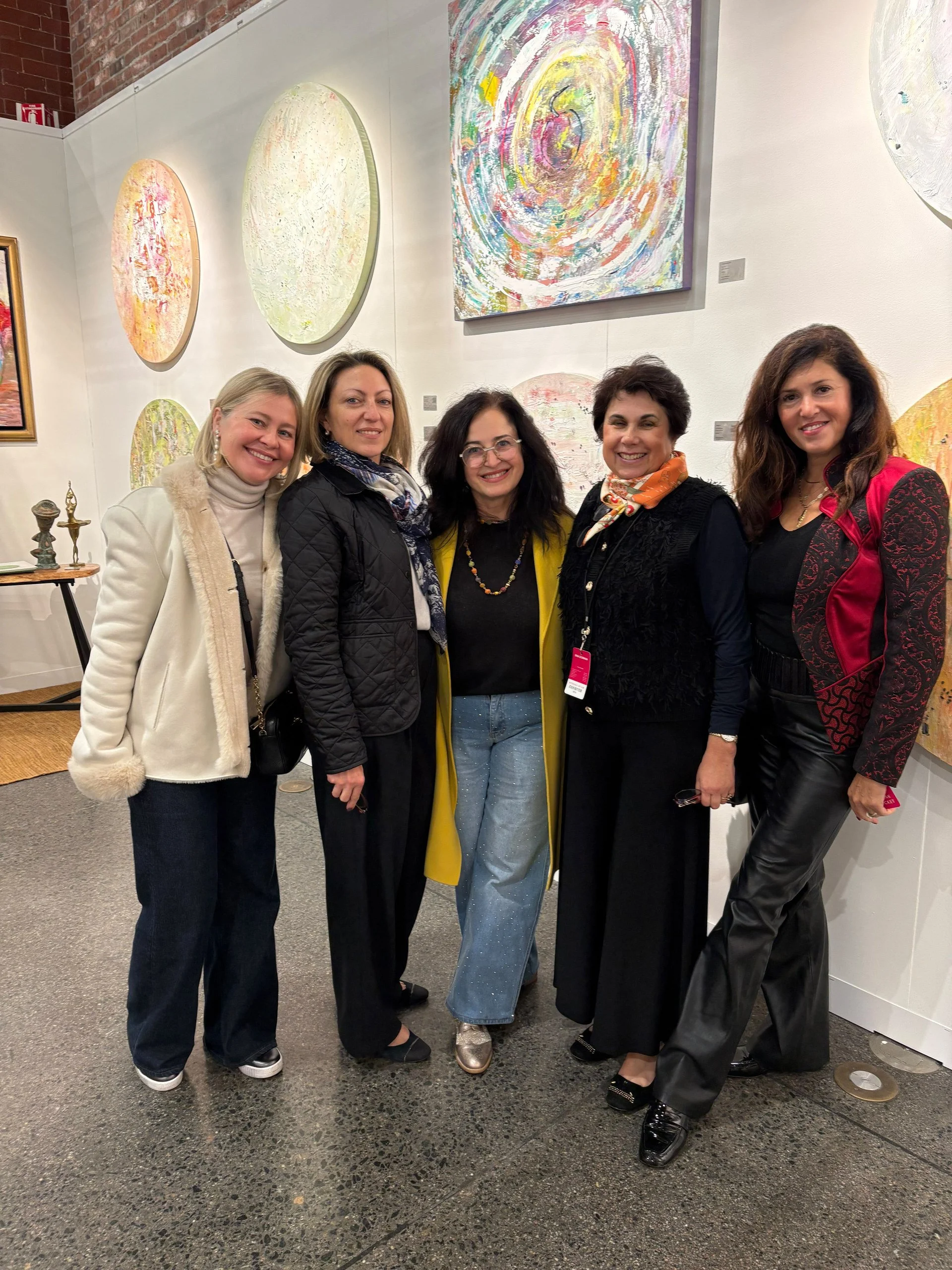
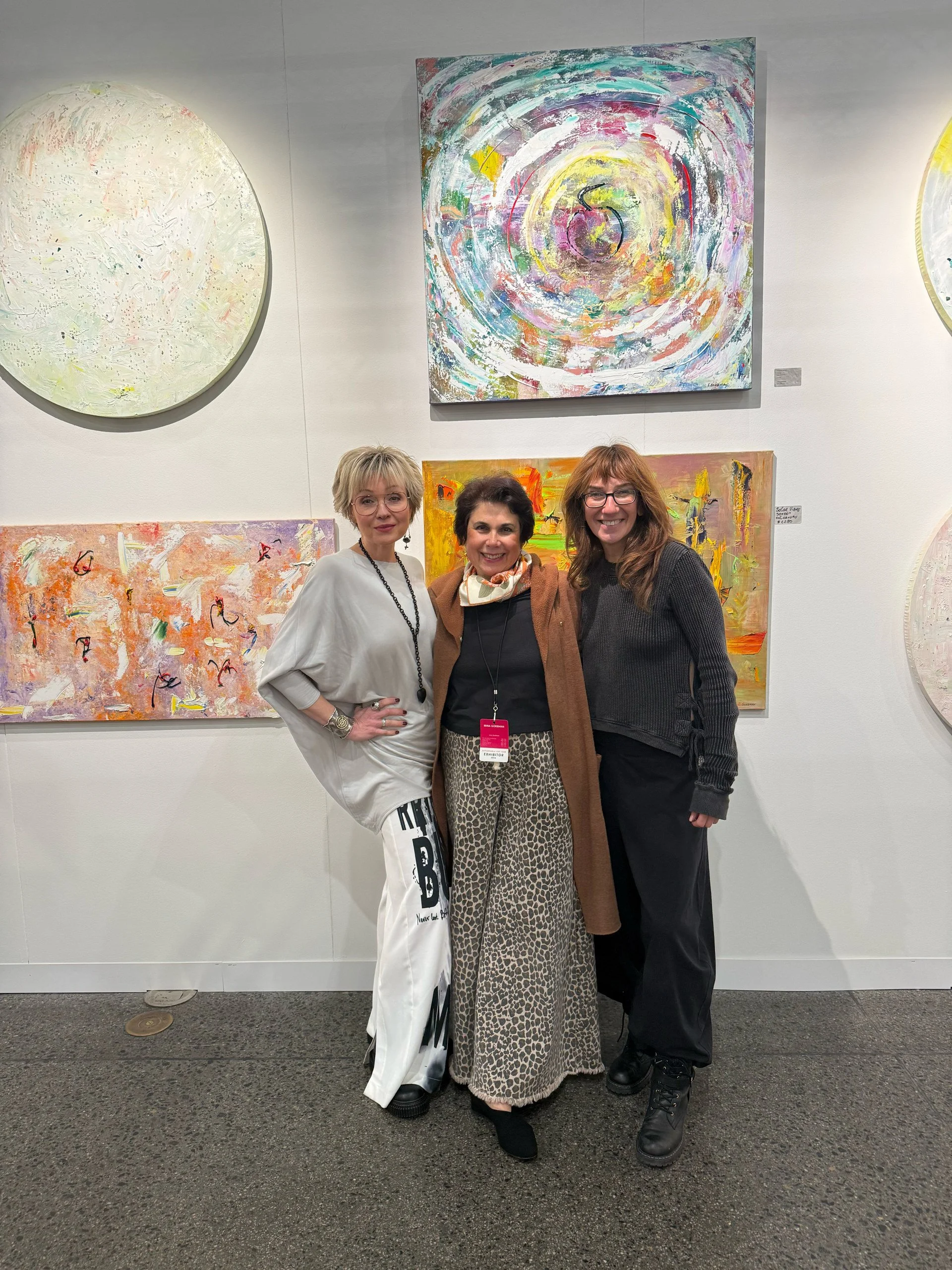
Designers came with projects in mind and asked practical questions — scale, sightlines, how a piece would read from across a room. Collectors came and looked slowly. Some came back a second day to see whether a painting still held them. Several works went home with people that weekend, and they are now in houses around Boston, which is where I most want them to be.
And some people simply came to look, said something generous, and walked on. Those conversations were not lesser. The most compelling interiors are not simply decorated — they reflect the personalities, experiences, and curiosity of the people who live in them. You can hear that curiosity in how someone talks about a painting they are not going to buy.
What I am taking into next year.
More conversations like these, in more rooms. I am working now on multi-canvas groupings for larger walls — spaces where a single painting is not enough and the pieces have to talk to each other as well as to the room.
Art brings warmth to a space. But more importantly, it brings something to think about.
My studio in Dover is open by appointment, and I would be glad to show you what came back from Boston and what has been made since.